Clarenville History

The History of Clarenville and Shoal Harbour

By: Paul Tilley, Paul Tilley’s Page

Unlike many of the historic fishing communities established along Newfoundland’s rugged coastline, the area surrounding Clarenville and Shoal Harbour—located at the head of Trinity Bay—was built on the backs of loggers, farmers, and trappers.

Today, Clarenville stands as the largest town in its region and the second fastest-growing municipality in Newfoundland and Labrador. This is the story of how two distinct, fiercely independent communities grew along the shores of Random Sound to ultimately become “Together as One.”

Early Years and Settlement (1845–1891)

The history of the region dates back to the mid-1840s. In 1845, John “Scholar” Tilley and his family sailed from Hants Harbour on the opposite side of Trinity Bay to over-summer in Random Sound. For several years, the Tilleys established a temporary summer camp on the Random Island Meade, a beach area directly across the sound from modern-day Clarenville. While the site was ideal for camping, it lacked immediate access to potable water.

In the spring of 1848, the Tilley family returned to settle permanently, locating their homestead in the Shoal Harbour valley at the mouth of the Shoal Harbour River.

The Birth of Industry

1853: The Tilleys began operating a water-driven sawmill on the Shoal Harbour River. John Tilley also expanded his early gardening efforts into a small farm, supplying oats and hay for livestock, alongside vegetables for the growing community.

Consolidation: For many years, Tilley and his son, Joseph, ran sawmills on both the Shoal Harbour and Lower Shoal Harbour rivers, processing the valley’s massive pine, spruce, and fir trees. Joseph eventually acquired a mill built by William Cowan on the Lower Shoal River, consolidating the local timber industry.

Expansion: Other founding families, including the Wisemans and Cowans, settled the coves along the shoreline. The Wisemans established a steam-powered mill on the shoreline (where a flywheel and steam piston can still be seen today), while the Mills family developed a massive enterprise at “Mills Siding” that produced biscuit boxes, barrels, and lumber for building schooners.

As sawmilling operations attracted more workers, services quickly followed. General stores, retail outlets, a telegraph station, and a post office emerged along the waterfront, transforming a scattering of logging camps into a proper settlement.

The Naming of “Clarenceville”

Long before the railway arrived, the area served as a vital terminal for “Packets”—sailing vessels like those captained by the prominent Edmund Seward—which ferried mail and passengers across the deep, sheltered waters of the sound from Carbonear. However, the official naming of the town is tied directly to the arrival of the “iron horse” in the late 19th century.

In 1891/92, the Newfoundland government amalgamated several smaller shoreline settlements—including Lower Shoal Harbour, Dark Hole (Dark Harbour), Brook Cove, Broad Cove, and Red Beach—into a larger centre. Shoal Harbour remained a separate community just to the north.

The Arrival of the Prime Minister

In the summer of 1892, the first passenger train puffed into a modest, wood-frame station near Brook Cove that served as a telegraph office and freight shed, managed by Miss Jennie Tilley. On board for an inspection trip was Sir William Whiteway, the Prime Minister of Newfoundland.

According to local lore, the naming happened during a casual conversation, though two versions of the story exist:

The Joseph Tilley Version: Joseph Tilley, the local Postmaster, approached Sir William, suggesting that since the community was destined to become a major railway hub, it deserved an official name and a proper post office.

The James Reid Version: A similar account suggests it was James Reid, a prominent associate of the Prime Minister, who nudged him for a formal designation.

In both accounts, the result was the same: the name “Clarenceville” was painted onto the side of the small station house.

The Identity of “Clarence”

While the timeline is clear, the exact inspiration for the name remains a subject of historical debate:

The Royal Tribute (Most Widely Accepted): The town was named to honour the Duke of Clarence, the eldest son of the Prince of Wales (later King Edward VII), who passed away in early 1892—the exact year the railway arrived.

The Premier’s Son: A secondary theory suggests Sir William Whiteway named the town after his own son, Clarence. However, historical records cast doubt on this, as there is no evidence that Whiteway had a son by that name.

From “Clarenceville” to Clarenville

Names often shift with clerical shorthand. While early postal records used “Clarenceville,” common usage quickly streamlined the title. By the time of the 1901 census, the middle “e” had been dropped, officially cementing the name Clarenville.

Mid-Century Growth & The Railway Shift

Around the turn of the 20th century, devastating forest fires in 1892 and 1903 ravaged local timberlands, starving the sawmills and forcing many residents toward the fishery. However, the railway provided a new economic lifeline.

While Shoal Harbour secured essential operational jobs and a two-story station when the Bonavista branch line opened in 1911, Clarenville was chosen as the primary regional service center. It received an engine house, marshalling yards, and major infrastructure.

By the 1930s and 1940s, fueled partly by the war effort, Clarenville pulled significantly ahead with the establishment of an asphalt plant, the Newfoundland Hardwoods plant, and a government shipyard building wooden minesweepers. Shoal Harbour became increasingly dependent on its rapidly developing neighbour (1951)

Following Newfoundland’s confederation with Canada in 1949, the provincial Local Government Act incentivized communities to take charge of their own services. On June 12, 1951, the Town of Clarenville was officially incorporated to manage its booming industrial growth.

First Mayor: Ernest Drover led the town’s first municipal council, which formed on July 10, 1951.

Initial Focus: The new council focused heavily on public works, expanding water services and formalizing systematic road maintenance.

A Short History of Shoal Harbour’s Independence

While Clarenville grew as a commercial hub, Shoal Harbour maintained a distinct, fiercely guarded identity. In February 1973, Shoal Harbour officially incorporated as its own municipality, electing a council led by Mayor Eric Butler.

Despite a small tax base, Shoal Harbour made impressive strides over the next two decades, constructing its own water and sewer network, a town hall, a ballfield, and a playground. They even acquired a town fire truck, which was housed in Clarenville’s fire hall—an early sign of the practical cooperation to come.

Joined at the Hub: The Amalgamation (1985–1994)

The unification of Clarenville and Shoal Harbour is often remembered as a standard bureaucratic merger, but archival records reveal a decade-long tug-of-war between provincial mandates, infrastructure crises, and community identity.

  1. The 1985 Referendum

By the 1980s, the physical borders of both towns had begun to merge, separated by little more than a causeway. Recognizing the inefficiency of dual municipal structures, Shoal Harbour Mayor Harris Thistle and Clarenville Mayor Fred Best placed a non-binding amalgamation question on the November 12, 1985, ballot. The result was a resounding rejection: 75% of Shoal Harbour residents voted “No.”

  1. The Provincial Push and Local Defiance (1989)

In 1989, Premier Clyde Wells’ government embarked on an aggressive campaign of municipal regionalization to cut costs. In August, the province requested that both towns postpone their upcoming elections to prepare for a forced merger.

Shoal Harbour reacted with swift defiance. At a heated council meeting, Mayor Myra Moore and local councillors rejected the province’s timeline, refusing to let the government “slam this on the people.” They proceeded with their local elections as scheduled.

  1. The Battle of Conditions (1990)

By 1990, independent commissioners were appointed to oversee a regional feasibility study. Realizing the provincial momentum was unstoppable, both towns shifted from resistance to hard-nosed negotiation:

The Shoal Harbour Mandate: Mayor Roy Percy demanded guaranteed provincial funding to complete Shoal Harbour’s unfinished water network, a $1-million water treatment plant, job security for town staff, and absolute 50/50 parity on any future combined council.

The Clarenville Counter-Argument: Mayor Fred Best countered that Clarenville’s population was double that of Shoal Harbour and its own infrastructure was “on the verge of collapse,” requiring a $10-million provincial infusion. He opposed an equal 50/50 council split, arguing it destroyed the basis of democracy by ignoring population size.

  1. Resolution and Amalgamation

Despite the fierce debates, financial realities and mutual service dependencies (such as interconnected water lines) ultimately aligned.

Effective January 1, 1994, the towns officially became one municipality under the transitional name Town of Clarenville-Shoal Harbour. The newly expanded town successfully hosted the 1994 Newfoundland & Labrador Winter Games, showcasing a united front to the province. On February 15, 1994, the merger was finalized, and by 1996, the hyphen was legally dropped, streamlining the name back to the Town of Clarenville.

The Lingering Echoes of Identity

Erasing a municipal boundary line did not instantly erase generations of local pride. The social friction of the merger reappeared in waves over the ensuing decades:

The 2003 Postal Crisis: In May 2003, Canada Post mandated that all local addresses be standardized strictly to “Clarenville,” phasing out the Shoal Harbour designation. This sparked an immediate identity crisis among residents who feared their history would be forgotten.

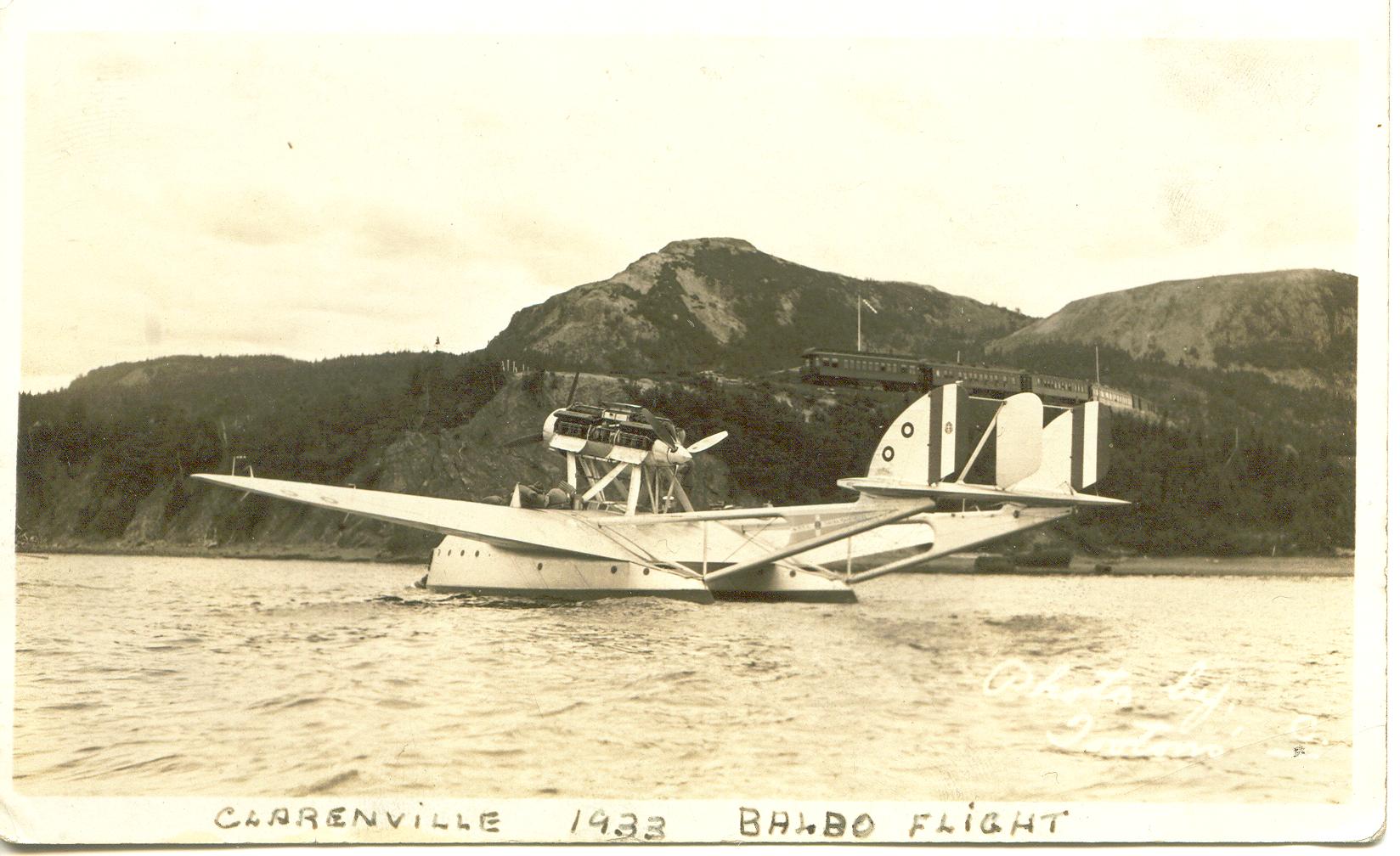
The Boundary Markers (2008–2009): In 2008, the town removed an aging Shoal Harbour sign near the wharf on Balbo Drive. Following community feedback, the town erected new signs in October 2009 to formally indicate the geographic boundary of the Shoal Harbour neighbourhood.

The Heritage Push (2015): More than twenty years after the merger, Community Development Chairman Paul Tilley addressed lingering anxieties, noting that while the amalgamation was an economic success, work must continue to ensure Shoal Harbour’s unique history is actively preserved through civic signage and historical markers.

Today, the history of Clarenville and Shoal Harbour serves as a premier example of regional growth—showing how a modern economic hub can successfully move into the future while honouring the distinct heritage of the places its residents call home.

scholarjohntilley
Scholar John Tilley
wisemansmill2
Site of Wiseman's Mill, Shoal Harbour
clarenville stn telegraph office (1)
Clarenville train station
shipyard
Shipbuilding in Clarenville
ship clarenville1
The "Clarenville" was part of the Splinter Fleet
transatlantic cable
The TAT-1 Cable improved global telecommunications