Clarenville and The Newfoundland Railway
Clarenville and the Newfoundland Railway: Rerouting History
The history of Clarenville is inextricably linked with the Newfoundland Railway but town was almost bypassed.
The first railway survey in 1875 traced an almost direct route across the island’s interior. In 1880, a committee of the House of Assembly recommended the construction of a narrow-gauge railway spanning 547 km (340 mi) from the colonial capital in St. John’s to Halls Bay.
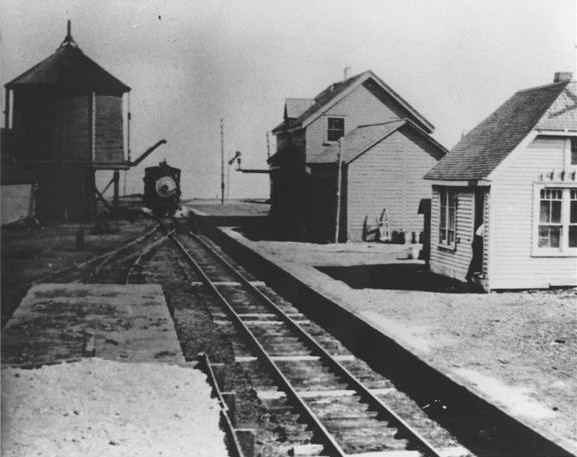
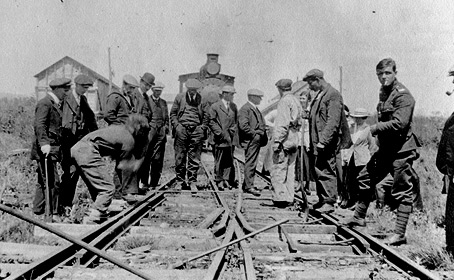
Construction on the Avalon Peninsula began in August 1881. However, the section of the railway through what is now Clarenville was not built until the 1890s.
As the main line’s grading approached the area in late 1891, engineers had initially planned to bypass Clarenville to avoid its challenging, steep hills. Local residents strongly disagreed with this engineering decision and successfully petitioned to have the route altered, ensuring the main line passed directly through the heart of their community.
This victory for the town meant that trains would forever face a considerable eastward grade just outside Clarenville. This hill boasts the second-steepest slope on the entire Newfoundland Railway, surpassed only by a section on the Gaff Topsails. From an engineer’s perspective, this might have seemed an ill-advised compromise, especially considering the rejection of a more direct island-crossing route proposed in 1875.
For the town, this decision proved to be profoundly beneficial, as it created many jobs. Even more were generated when the branch line to Bonavista was constructed in 1911.
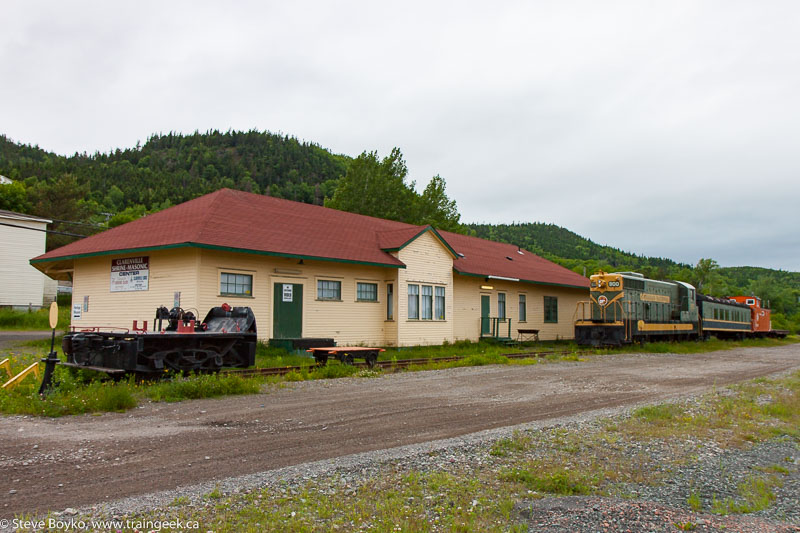
The railway fundamentally became the cornerstone of Clarenville’s infrastructure. It transformed Clarenville into an important confluence of two major transportation modes: rail lines and sea lanes. Random Sound provided a large, mostly ice-free port, the last of its size on the railway before reaching Corner Brook. This strategic advantage allowed cargo and coastal vessels to exchange freight and passengers efficiently with trains in Clarenville.
Sources:
Photos: